


Mediation Keeps Avenues Open; Trust Paves the Way Forward
The value of mediation lies not merely in avoiding litigation or arbitration.
More importantly, it enables disputing parties to find common ground and continue working together while the relationship can still be preserved.
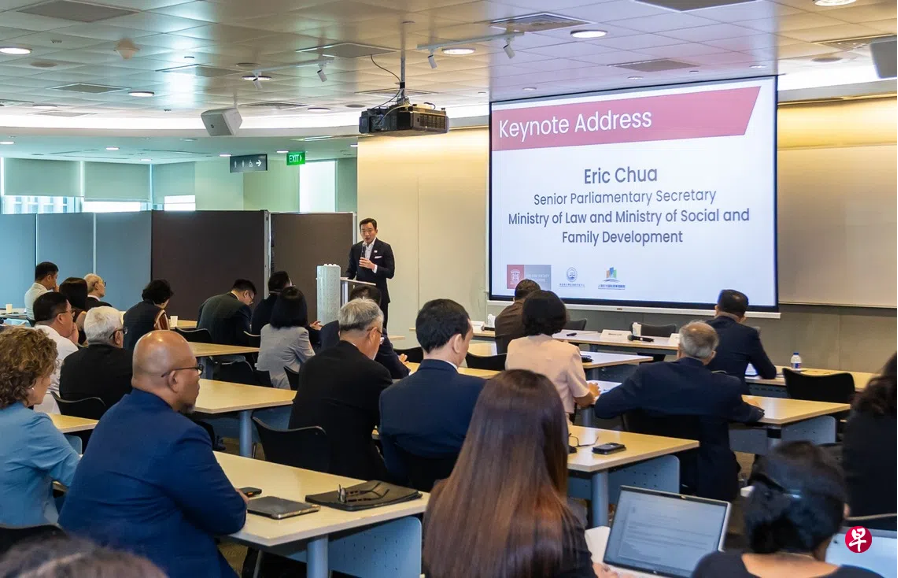
Eric Chua, Senior Parliamentary Secretary, Ministry of Law and Ministry of Social and Family Development (facing the camera) attends a forum organised by the Law Society of Singapore’s Mediation Committee during Singapore Convention Week. (Photo: Ministry of Law)
Even when there is a clear legal victory, a commercial dispute may have no real winner. Sharing his insights during a fireside chat at Singapore Convention Week (SC Week), Ho Kwon Ping, former chairman of the Singapore Management University Board of Trustees and executive chairman of Banyan Group, recounted that while his company had prevailed in past cases resolved by arbitration, most of these matters damaged business relationships. Mediation, by contrast, leaves open the possibility for parties to continue doing business after resolving their dispute.
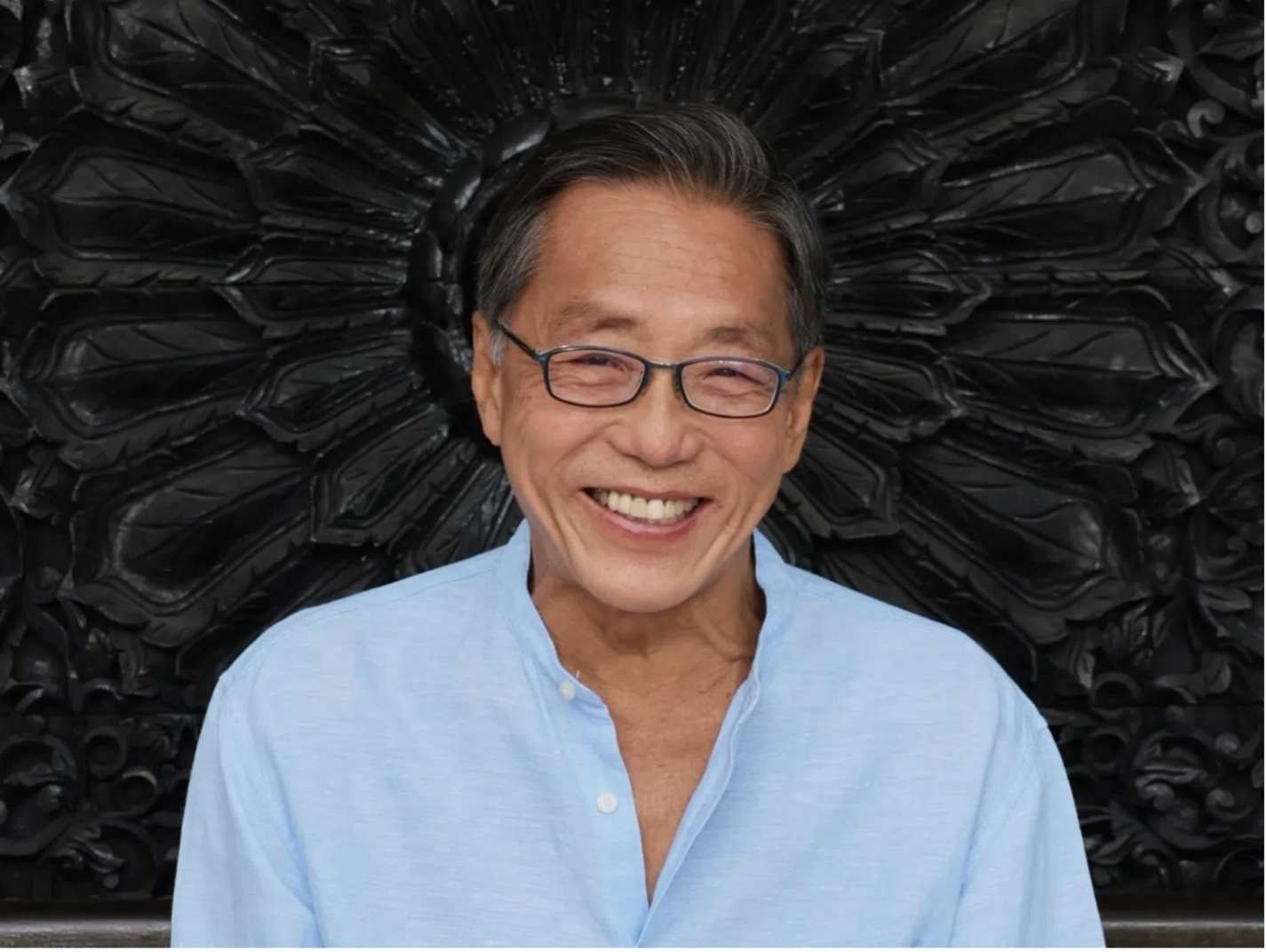
Ho Kwon Ping pointed out that a good mediator must possess more than legal knowledge. When dealing with disputes intertwined with geopolitics, business cultures and complex interests, mediators also need to understand the parties’ emotions, motivations and cultural backgrounds, and look beyond the legal wording of contracts to devise creative solutions. (File photo)
In his view, a good mediator must possess more than legal knowledge. When dealing with disputes intertwined with geopolitics, business cultures and complex interests, mediators also need to understand the parties’ emotions, motivations and cultural backgrounds, and look beyond the legal wording of contracts to devise creative solutions.
This year’s SC Week took place from 24 to 28 August. It was organised by Singapore’s Ministry of Law in collaboration with the United Nations Commission on International Trade Law (UNCITRAL) and other partner organisations. Its theme was “Timeless Principles, Timely Solutions: Nurturing Trust in a Changing World”. The fireside chat was organised by the Singapore International Mediation Centre (SIMC).
Speaking after the fireside chat, Minister for Law and Second Minister for Home Affairs, Edwin Tong SC said that the value of mediation lies not merely in avoiding litigation or arbitration. More importantly, it enables disputing parties to find common ground and continue working together while the relationship can still be preserved.
In a world where consensus is increasingly difficult to achieve, he said, “the ability of parties to find agreement through consensus will now become more important than before.”
Minister Tong said mediation should not be viewed as an alternative to litigation or arbitration. Each of the three mechanisms has its own function, and they can complement one another. Mediation may be used before proceedings begin, while they are under way, or even after a decision has been rendered.
Avoiding an “all-or-nothing” outcome
He illustrated this point with his experience as a lawyer. He used to be quite perplexed when he received letters to request parties to mediate even after the judgment had been handed down and the losing party had filed an appeal. He initially thought mediation was unnecessary. He later realised that even where one party had won the case, mediation could still guard against an all‑or‑nothing outcome.
Minister Tong said dispute resolution is not an end in itself. “The sooner we can resolve disputes well, the sooner parties can put their time, energy and resources back into creating value rather than fighting over it.” For businesses, the value of mediation is that it gives parties an opportunity to refocus on the future rather than continue expending resources on the dispute itself.
Colin Seow, director of Colin Seow Chambers LLC, who participated in SC Week events, said in an interview that cross-border dispute risks are becoming more complex. Beyond jurisdiction and enforcement, they include sanctions exposure, counterparty solvency and parallel proceedings in multiple jurisdictions. Clients are increasingly becoming more discerning of the various dispute resolution fora and methods available, and the kind of legal certainty each of these options bring.
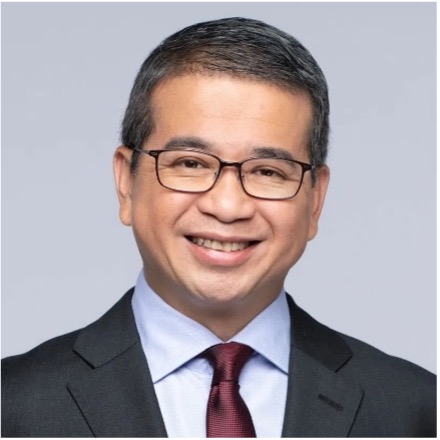
Minister Tong said dispute resolution is not an end in itself. “The sooner we can resolve disputes well, the sooner parties can put their time, energy and resources back into creating value rather than fighting over it.
Senior Counsel Thio Shen Yi SC, joint managing partner of TSMP Law Corporation, also said in an interview that geopolitical factors can have knock-on effects on cross-border contracts, while mediation can be introduced at different stages of a dispute to secure a better outcome for both sides.
In his view, changes in the geopolitical situation affect commercial disputes, and any factor affecting a dispute will in turn affect a company’s choice of dispute resolution mechanisms, including mediation. Before a final decision is made, mediation still gives both sides an opportunity to reassess their interests and explore room for a settlement.
Senior Parliamentary Secretary (SPS), Ministry of Law and Ministry of Social and Family Development, Eric Chua addressed mediation from the perspective of people and relationships when he attended the seminar “Mediation Through Asian Perspectives: Building Trust in Commercial Dispute Resolution” on 26 August.
He said the law provides rules and boundaries, while mediation “creates space for people to find common ground within the law”. The law can determine rights, but mediation can sometimes preserve relationships.
Mediation fosters understanding and trust
SPS Eric Chua said: “The best type of mediation does more than bring a dispute to an end. It creates enough understanding and trust for people to move forward together. Singapore can continue to be a place where parties from different countries, cultures and legal traditions know they will be heard fairly, that is something worth building and protecting.”
Organised by the Law Society of Singapore’s Mediation Committee, the seminar was one of this year’s SC Week partner events. It brought together perspectives from Singapore, China and Mongolia to discuss why commercial parties choose, or do not choose, mediation, and what would give them confidence that mediation can produce commercially meaningful outcomes.
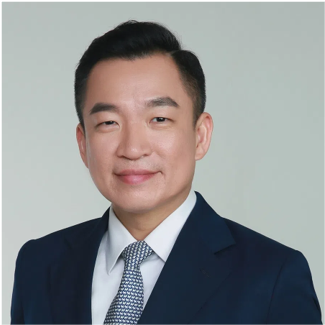
“The best mediation does more than bring a dispute to an end. It creates enough understanding and trust for people to move forward together.” — Eric Chua, Senior Parliamentary Secretary, Ministry of Law and Ministry of Social and Family Development
Separately, Minister Tong said at the UNCITRAL Academy Conference that the rule of law is a timeless principle: it is this consistency that makes trust possible. Businesses can adapt to changes in rules, but have greater difficulty coping with uncertainty, unpredictability and arbitrariness.
The question, he said, is not whether international rules and institutions are still needed, but how we can come together to ensure that they continue to command trust in a very different world.
For a small country highly dependent on international trade, investment and a rules-based system, trust is itself a competitive advantage. Minister Tong said that if size and power make right , “then in almost every situation, we would lose”.
Singapore Convention Week coincides with two milestones
This year’s event coincided with the bicentennial of Singapore’s modern legal system (SGLaw200) and the 60th anniversary of UNCITRAL.
UNCITRAL has long worked to harmonise international trade law, and the Singapore Convention on Mediation (SCM) is one of its important achievements. UNCITRAL finalised the text of the SCM in 2018; the United Nations General Assembly adopted it on 20 December that year; and it opened for signature in Singapore on 7 August 2019.
This year’s UNCITRAL Academy conference was also jointly organised by Singapore’s Ministry of Law and UNCITRAL. In addition to the conference and industry capacity-building workshops, it included workshops for government officials on experiences implementing the SCM in different countries.
At present, the Singapore Convention on Mediation has 60 signatories and 24 parties. It provides a uniform framework for the cross-border enforcement of mediated settlement agreements, giving businesses greater certainty as to whether a settlement can be enforced in another jurisdiction.
Singapore also made significant announcements during SC Week, including that it would bid to host the proposed multilateral investment tribunal to handle disputes between foreign investors and states. The Ministry of Law and the National University of Singapore will also establish a new Centre for Arbitration and International Dispute Resolution (CAIDR) to drive thought leadership and innovation in international dispute resolution.
SC Week brought together legal professionals, business leaders and policymakers from nearly 100 jurisdictions. More than 70 partner events were held, covering mediation, arbitration, litigation, international trade, legal technology, among others.
[In partnership with the Ministry of Law.]
Translated from the original article, "调解留后路 信任走长远, Lianhe Zaobao" with permission from Ministry of Law, Singapore to publish. Any errors are the translator's own.